
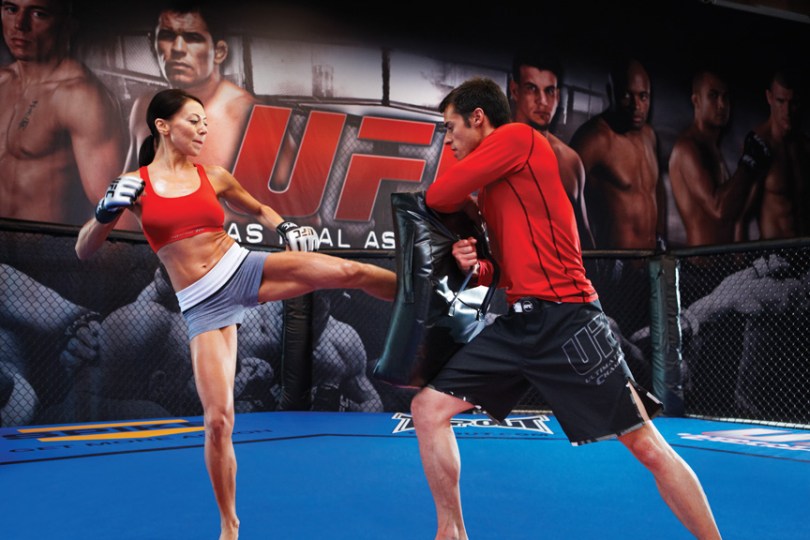
Walk into any boxing or kickboxing class at UFC GYM and you feel it before the first round starts. The music, the coach’s voice, the sound of gloves on bags. Then the bell rings, and for the next hour you are moving in a way most workouts never ask you to.
That feeling is the point. Boxing and kickboxing are two of the most complete workouts you can do, for men, for women, and for kids. Here’s why, what the research says, and why they sit at the heart of how we train at UFC GYM.
Cardio That Doesn’t Feel Like Cardio
Ask anyone who has finished a few rounds on the heavy bag: this is serious conditioning. In a University of New Mexico study of fitness boxing, participants reached heart rates of 85–93% of their maximum and burned roughly 10–11 calories per minute during short punching rounds. The researchers concluded that fitness boxing compares favorably with other exercise modes for cardiovascular response and calorie burn.
Another study measured a full one-hour, non-contact boxing session and found the energy cost was about the same as running roughly 9 km in that hour. And a five-week kickboxing program (three one-hour sessions a week) improved participants’ aerobic power, anaerobic fitness, speed, agility and flexibility compared with a control group.
The difference is how it feels. You’re not watching a clock on a treadmill. You’re working combinations, chasing your coach’s count, and trying to beat the round. Time disappears. The work gets done.
Movement No Machine Can Copy
Gym equipment is great at what it’s built for. A machine guides your body along a fixed path, one muscle group at a time. That has its place. But real life doesn’t move on a fixed path, and neither does a fighter.
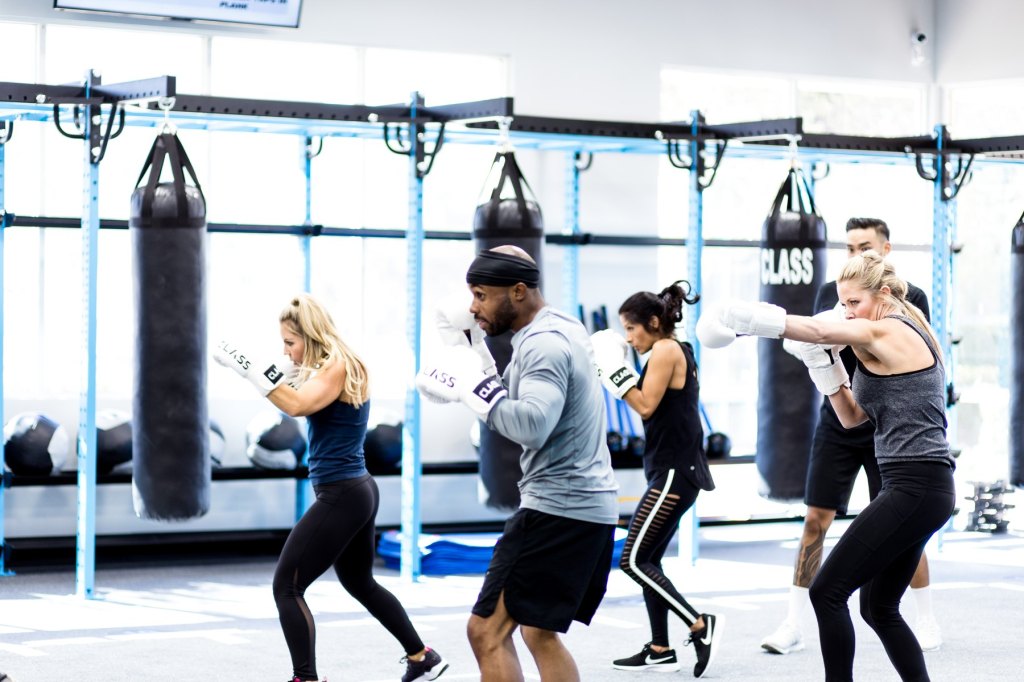
A single jab-cross-hook-kick combination asks you to push off the floor, rotate through your hips and core, transfer that power up through your shoulders, stay balanced on one leg, and get your hands back to guard. Then you move your feet, change angles and do it again, reacting to a coach or partner in real time.
That mix of footwork, rotation, balance, coordination and reaction is what we mean by functional movement, and there is no replication of it that a piece of gym equipment can copy. It’s the same reason the kickboxing study above saw gains in speed and agility, not just endurance. You train the whole system, the way your body actually moves.

Why Women Love Kickboxing
Ask the women in our kickboxing classes what keeps them coming back, and you’ll hear two things again and again: their legs and their flexibility.
Kicks are a lower-body workout in disguise. Every roundhouse, push kick and knee recruits the glutes, hips, quads, hamstrings and calves, while the standing leg works to keep you balanced. Research presented at the American College of Sports Medicine’s annual meeting found that in a cardio kickboxing workout for women, the leg-focused and combined arm-and-leg segments drove higher exercise intensity than arms-only work. The takeaway was simple: the legs do a lot of the heavy lifting.
Flexibility comes with it. Kicking higher, pivoting and moving through a full range of motion, round after round, builds mobility through the hips and legs. The five-week kickboxing study we mentioned saw measurable improvements in flexibility as well as agility and speed.
There’s a strength story for older members too. In a 12-week group kickboxing program for adults aged 50 to 85 (about three-quarters of them women), participants improved handgrip strength and walking speed and reduced their waist measurements compared with a control group.
Confidence You Carry Out the Door
Something changes the first time you land a clean combination. You stand a little taller. You start to believe you can handle hard things, because you just did one.
Researchers are paying attention to this. A 2023 scoping review of 16 studies on non-contact boxing found it was linked with improved mood, self-esteem, confidence and concentration, along with a healthy release of stress. The authors call the evidence promising but preliminary, and we agree. What we see in our gyms every day lines up: people come in nervous and leave with their heads up.
Boxing and Parkinson’s: A Fight Worth Taking On
One of the most inspiring stories in fitness over the last decade has been non-contact boxing for people living with Parkinson’s disease.
The Parkinson’s Foundation calls exercise a vital part of managing Parkinson’s, and lists non-contact boxing classes among the programs that can help with mobility and function. Its guidance points to aerobic work, strength, balance and agility, and flexibility: all things a well-coached boxing class trains. The Foundation also notes that people with Parkinson’s who exercise at least 2.5 hours a week, starting earlier, saw a slower decline in quality of life.
In a randomized trial at the University of Indianapolis, adults with Parkinson’s who did 12 weeks of group boxing training improved their walking speed and walking endurance. Both the boxing group and a traditional exercise group also improved balance, mobility and quality of life.
To be clear, boxing is not a treatment or a cure for Parkinson’s. It is a way to move with purpose, alongside people who have your back. If you or someone you love is living with Parkinson’s, talk with your doctor or a physical therapist first, then come see us.
Built for Kids, Too
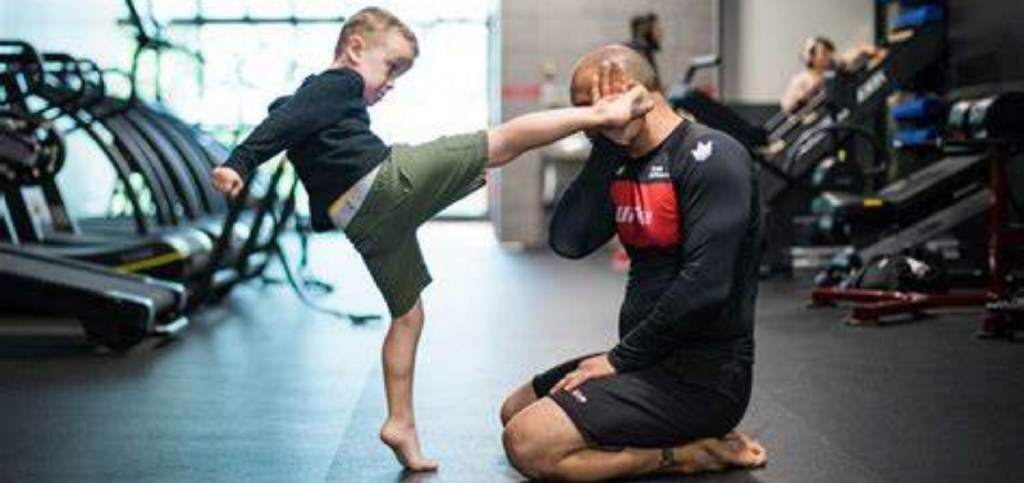
The American Heart Association recommends that kids ages 6 to 17 get at least 60 minutes of moderate-to-vigorous activity every day, with muscle- and bone-strengthening activity at least three days a week. A youth boxing or kickboxing class checks every box: it’s active, it builds strength and coordination, and kids actually want to go back.
Just as important is what kids learn between the rounds: listening to a coach, respecting a partner, working through something hard and celebrating progress. Research on martial arts and youth suggests the outcomes depend heavily on how a program is coached and the culture around it. That’s exactly why culture comes first in our kids programs.
One Gym, the Whole Experience
UFC GYM is a holistic fitness organization. Every one of our gyms brings multiple training modalities and specialties under one roof, so you never have to choose between getting strong, getting fit and taking care of your body.
Boxing and kickboxing are our signature formats. They’re what make our members feel different from the moment they walk in. A typical day might look like this: lift weights, jump into a boxing or kickboxing class, then finish with recovery. Strength, skill, conditioning and recovery, all in one visit, and you get to enjoy the entire experience. (Specific programs and recovery offerings vary by location, so check with your local gym.)
A Boxing Class Is Our Culture in Motion
Our core values are Fun, Inspiring, Grit, Humble and Teamwork. Take one boxing class, and you’ll see every one of them in action.
- Fun. Music up, gloves on, energy high. The hour flies.
- Inspiring. The person on the next bag pushing through the last round makes you push too.
- Grit. Round three, arms burning, and you keep your hands up anyway.
- Humble. Everyone starts with a jab. Beginners and veterans learn side by side, and everyone keeps learning.
- Teamwork. Partner drills mean holding pads for each other, matching the pace and lifting each other up.
That’s not a coincidence. It’s exactly what it’s like to take a boxing class, and it’s exactly the culture we build in every UFC GYM. Strong alone, unstoppable together.

Find Your Fighting Spirit
You don’t need to be a fighter to train like one. You just need to show up for your first round. Whether you’re chasing better cardio, stronger legs, more confidence, a healthier way to move with Parkinson’s, or a place where your kids can thrive, there’s a boxing or kickboxing class waiting for you.
At UFC GYM, we empower the fighting spirit in you. Come train different.
This article is for general information and isn’t medical advice. If you have a health condition, are new to exercise, or are returning after time away, check with your doctor before starting a new program.
Sources
- Kravitz L, et al. “Cardiovascular response to punching tempo.” Journal of Strength and Conditioning Research, 2003. PubMed
- Bellinger B, et al. “Energy expenditure of a noncontact boxing training session compared with submaximal treadmill running.” Medicine & Science in Sports & Exercise, 1997. PubMed
- Ouergui I, et al. “The effects of five weeks of kickboxing training on physical fitness.” Muscles, Ligaments and Tendons Journal, 2014. PubMed
- Ergun AT, Plato PA, Cisar CJ. “Cardiovascular and Metabolic Responses to Noncontact Kickboxing in Females.” Medicine & Science in Sports & Exercise 38(5):S497, 2006 (ACSM annual meeting abstract). Link
- Lin YA, et al. “The Effectiveness of a Group Kickboxing Training Program on Sarcopenia and Osteoporosis Parameters in Community-Dwelling Adults Aged 50–85 Years.” Frontiers in Medicine, 2022. PubMed
- Bozdarov J, et al. “Boxing as an Intervention in Mental Health: A Scoping Review.” American Journal of Lifestyle Medicine, 2023. PMC
- Combs SA, et al. “Community-based group exercise for persons with Parkinson disease: a randomized controlled trial.” NeuroRehabilitation, 2013. PubMed
- Parkinson’s Foundation. “Exercise.” parkinson.org
- Parkinson’s Foundation. “The Exercise Files: A Fight Worth a Good Punch.” parkinson.org
- American Heart Association. “Recommendations for Physical Activity in Adults and Kids.” heart.org
- Vertonghen J, Theeboom M. “The Social-Psychological Outcomes of Martial Arts Practise Among Youth: A Review.” Journal of Sports Science & Medicine, 2010. PMC

